Greetings good people of the internet. I want to share my thoughts of a very popular questions that I get a lot and I'm sure you also get too from people around you. What I'm about to share is just an opinion and must not be treated as an exact guideline, although it really fits into my context of camera buying in this ultra modern age of camera technology (November 2015).
Camera nowadays
In these days of #selfie, #wefie, #foodporn, #nofilter, #ootd, #tbt, and #yolo, I often time ask myself: what is the significance of having a dedicated camera for a person these days? What is the real meaning of photography for a regular person these days? What's the value of the photographs when everyone can take a picture?
One thing that I'm sure is that consumer point-and-shoot camera's days are numbered. My Sony Xperia phone has the 1/2.3 sensor in it that is the same with what you will get on many consumer pocket camera and it also has the capability to process the picture properly with little noise and decent sharpness while maintaining good color and dynamic range.


Heck, I can even Lightroom the poo out of my phone pictures and make it look so much better while I struggled with my previously owned Canon Powershot G15 to get a decent post processing result. So, as you see, it is quite pointless these days for people to buy consumer camera when their phone takes picture with equal quality.
With that in mind, I can only imagine that photography is going to be much easier, more portable, more instant, more share-able, and more accessible to even more people in the future. And even today, that trend is very apparent and it is happening right at this very second with the help of social media, apps, yada yada yada.
In short, it's safe to say that most people today who want to start "serious photography" are most of the time coming as smartphone camera shooters. Which I think isn't too different from point-and-shoot shooters; they only know how to point, and shoot the camera/phone.
Motivation
When those people who were previously a smartphone or point-and-shoot shooters want to start "serious photography", I do question a lot of things. I must know what the motivations are for that person to start photography, and most of the time many people will say "I just want a nice, big, professional camera with lenses that takes great pictures. Which one is better, Canon or Nikon?"
Some people will want to use photography as a way to get more income. They will want to make money with taking pictures professionally, and they want to have the best bang for the buck camera that they can get with the best possible image quality for the money. And that's when spending a good chunk of money for a nice camera with lenses and accessories makes a lot of sense. They specifically know what they want to produce with the image, and that makes it a lot easier to suggest a specific camera system that will suit them.
But others are doing photography just for a hobby. They just want to have a nice camera that can take good image during vacation that could do more than what their cellphones camera can do. They demand high quality image in a more portable package and it should be able to deliver good images in many different situation. They want a step up from a phone-camera or a point-and-shoot camera. And that's the majority of the crowd that I'm encountering right now, including myself.
Two big players of DSLR are Canon and Nikon(and Sony's Alpha A-mount, but they are technically half mirrorless). This is where the opinion gets divided most of the time, Canon vs Nikon. Most will say Canon is better than Nikon, without even knowing why. Some who say Nikon is better than Canon is right, but they also don't know why.
Let me tell you what I know from both Canon and Nikon. As of today, Nikon is better for still pictures compared to Canon. It generally has more megapixel(if it matters to you, it doesn't matter to me), it has better dynamic range, better noise performance, its sensor is also able to extract way more detail compared to Canon's sensor. Canon pictures are always a bit softer compared to Nikon(except for the new 5DSR, which also has the most megapixel compared to Nikon's highest offering), and all of Canon's cameras lack the dynamic range that is important for landscape photography. Some people will say Nikon color looks better than Canon, no that is not true. When you shoot RAW, both can look very similar, and can be adjusted to look like one another.
 Where Canon wins is on video. 5D Mark III has the least amount of moire and aliasing compared to Nikon. Also Canon has better selection of lens compared to Nikon, and some of Canon's lenses that are available in Nikon's line-up are actually better performing than what Nikon has. For example, Canon's 70-200mm f2.8 is better when compared to Nikon's, simply due to the lack of focus breathing and the ability to shoot wide open at 200mm without compromising sharpness and detail. Canon also has plenty of options for ultra telephoto lenses that can produce wonderful images.
 However, not all Canon's lens are better compared to Nikon. Nikon still has one legendary lens that can beat the other versions of that lens which is 14-24mm f2.8. Canon has similarly spec'ed 16-35mm f2.8, 16-35mm f4, and 11-24mm f4, but not one of them has the same performance and balance when compared to this lens. It's regarded as one of the best ultra wide-angle lens for quite some time, and it still performs wonderfully until today.
So for those reasons, I can personally simplify which one should you choose. If you are a landscape photographer who doesn't always need a telephoto lens, Nikon is probably the best choice for you. Portrait photographer will also benefit from using Nikon's lens as long as you don't need the telephoto lens. If you need to print high-resolution prints or need to extract as much detail out of the camera, Nikon is also a better choice.
If you are a portrait photographer, sport photographer, wildlife photographer, or constantly need to use long telephoto lens, Canon has the advantage. If you take a lot of video, Canon is also a good choice.
Canon shooter, choose 5D Mark III for video, 5DS/5DSR for stills, and 7D Mark II for long lens and the best autofocus performance. Nikon shooter, choose D750 for both video and stills, and D810 for stills. Don't buy anything under or above that, they're practically not worth the price.
The thing about mirrorless camera that appeals the most is the relatively smaller overall size of the camera when compared with its same-spec'ed DSLR counterpart, especially when we consider the size of the lenses as well. This is mainly achieved by removing the prism-mirror design that's still present on the DSLR. By removing the prism, the "flange distance" between the lens to the sensor is greatly reduced, allowing for smaller and lighter lenses to be attached to the camera. The only drawback to this is that the camera has to rely to electronic viewfinder or back-screen LCD for composition. This isn't necessarily a bad thing, since EVF technology has gotten so good today, some people actually prefer EVF over OVF.
The main arguments that are always being used to discourage people from buying mirrorless cameras are the slower autofocus and the inferior image quality when compared to DSLR, even the cheap ones. While it may be true for some mirrorless systems, generally they're not always true.
First, the autofocus on the mirrorless camera utilize a "Contrast Detect" system that actually works by trying to lock on the most contrasty focusing on a certain point (please correct me if I'm wrong, I'm not the most technically knowledgeable when it comes to certain technical stuffs). DSLR utilizes "Phase Detect" autofocus which uses a small phase-sensor embedded under the mirror to "line-up" the images from the lens and the phase sensor to get it in focus (also correct me if I'm wrong). For most of the time, contrast detect autofocus is pretty fast, can be as fast as the phase detect autofocus in single shot. But when it comes to continuous focus, phase detect still has the upper hand until now.
As for image quality, mirrorless now has finally reached full-frame sensor at 42MP in the form of Sony Alpha 7R Mark II. It sits on the same place as the Nikon D810 and Canon 5DSR, and the image quality produced by that camera is as stellar as both Nikon and Canon's offering if not better. So the argument of inferior image quality isn't valid anymore.
Now onto the choices for mirrorless cameras...
CANON
 Canon made a mirrorless system starting with EOS M, and now its recently released EOS M3. The original EOS M is handicapped in many ways. The autofocus is way to slow, the controls are fiddly, and the lens selection isn't that much. Even with the EOS M3, the autofocus isn't yet on par with other mirrorless cameras. It uses the APS-C sensor that's commonly found in two digits EOS DSLRs, and it produces the same image quality as them. You can use your regular EF or EF-S mount lenses with EOS M or M3, but they will take a toll at autofocus speed, which on this camera is already slow even with native lenses. I don't recommend this system at all, it's practically the worst performing mirrorless camera system ever! Canon should be ashamed of these issues! I sold my EOS M long time ago, and I regretted that I fell into the marketing seduction of this camera. Such a shame, since the image quality of the Canon APS-C is pretty good for what it's supposed to be.
Points to consider for Canon EOS M system:
- Bad autofocus.
- Bad lens selection.
- Lack of attention from Canon to develop the system.
- The original EOS M is cheap though, so if you need a cheap mirrorless you can buy the original EOS M.
- Nice touchscreen. Good image quality but not as good as the other APS-C offerings from Sony or Fuji.
NIKON
 Nikon also made the Nikon 1 series mirrorless cameras which is more established and well-thought compared to Canon's EOS M. It has good selection of lenses and also the cameras are performing decently especially when it comes to features added, burst rate speed, and autofocus. The only drawbacks of this system is the rather-expensive pricing and the small 1-inch sensor that's being employed on the cameras, which doesn't work too well in low light conditions. Many people use this system for wild-life, as the 1 inch sensor can turn their mild tele lens into an ultra long telephoto lens with a very decent autofocus, and at the same time cram the files with so much megapixels that translates into extra details. But this system isn't as popular as other mirrorless systems.
Points to consider for Nikon 1 series:
- Fast autofocus.
- Decent lens and body selection.
- Small size.
- Lots of nice features, some are also waterproof.
- Smaller sensor can't perform well in low light situations.
MICRO FOUR THIRDS(Panasonic and Olympus)

 Moving on, there's a joint camera system that's being occupied by both Panasonic and Olympus which is called Micro Four Thirds(MFT or M4/3), which uses MFT mount. It's the most mature mirrorless system by far, and it has the most selection of both body and lens. The recent offerings of Panasonic and Olympus are really good, with tons of features being crammed into their bodies at different price points. MFT cameras are generally smaller than APS-C mirrorless cameras, especially when considering the lens size together with the body. Both Panasonic and Olympus cameras have very fast autofocus speed, which I think is the fastest when compared to APS-C and full-frame mirrorless cameras. Panasonic has better video features such as 4K recording and multi FPS footages without slouching on the still picture department. Olympus is geared more toward still picture by adding important features such as in-body stabilizer which allows the use of non stabilized lens to get longer exposures without shaking. I personally prefer MFT cameras because they're simply the most balanced cameras when it comes to performance vs size vs price vs the ecosystem of the system itself. The main drawback of MFT cameras is that they're using slightly smaller than APS-C sensor that's called 4/3 sensor. The sensor now performs well in lower light to a certain degree but it cannot compete with the shallowness of the depth of field produced by both APS-C and full frame sensors.
Points to consider for MFT cameras:
- Fast autofocus. Panasonic faster than Fuji and Sony.
- Most complete selection of lens up to pro level and great selection of body at different price points up to pro-level.
- Panasonic good for both still and video. (GX7, GX8, G7, GH4, GM5, GM1)
- Olympus good for still, but the latest one isn't a slouch in video. (E-M1, E-M5II, E-M10II)
- Generally small size, but can also be big too. (GM1, GM5, E-PL6, E-PL7)
- 4/3 sensor performs very well but can't get very shallow depth of field compared to APS-C or full frame.
- Nice touchscreen for most cameras.
- Panasonic has good menu layout, Olympus doesn't but it has a Super Control Panel for quick-menu.
FUJI
 Fuji is also one of the most popular mirrorless brand with its X-series cameras. Starting with a fix lens X100 camera, Fuji has now introduced many bodies, both interchangeable-lens and fix-lens that screams quality. It uses Fuji Trans-X APS-C sensor which boast nice image quality as well as good low light performance. Fuji has a quite nice lens selection too, but at a rather expensive price compared to other systems. Most of Fuji cameras has that retro-styled bodies which reminds most people to vintage rangefinder film cameras from many years ago. I must say, I like that kind of look to be honest. Autofocus was slow when they first got the X100 and the early X Pro and X-E models, but now with the firmware updates on almost all of their bodies, the autofocus speed has gotten better and better each time they roll an update.
Points to consider for Fuji X series:
- Good autofocus. (X-T1, X-E2, X-M1, X-A2)
- Good lens selection, but the price is rather expensive.
- Good selection of bodies, up to pro level.
- Nice performance of the X-Trans APS-C sensor, even in low light.
- Handsomely designed bodies.
- Video features are very limited.
- Fuji issues firmware updates frequently, even for older camera models.
- No touchscreen.
SONY
 Sony is also one of the hottest mirrorless camera maker. They started with Alpha A-mount series long time ago, and then they continued with NEX series, and now with the new Alpha E-mount series. Sony has two sensors that are being employed on its cameras, an APS-C sensor, and a full frame sensor. Both A6000 and A5100 have APS-C sensor while the larger A7 series cameras have full frame sensor. The APS-C sensor cameras have a very decent autofocus speed and they are generally very well-spec'ed for the price, making them very competitive when compared to the other brands. The full-frame sensor cameras don't have as fast autofocus when compared to the APS-C sensor equipped cameras, but the image quality produced by the A7 series cameras is currently the best in the mirrorless market. They do decent video, even they have A7S series that are aimed exclusively for video. The only drawback to the system is the lack of fast pro zoom lens, which hinders professional photographers to jump into this system completely.
Points to consider for Sony E-mount cameras:
- APS-C excellent autofocus. (A6000, A5100)
- Full-frame excellent image quality but AF not as fast. (A7II, A7RII, A7SII)
- The only system that can offer full-frame mirrorless camera "at reasonable price-point". (Original A7)
- Good video, especially on A7S series.
- Okay selection of lens, but lacks pro fast zoom lenses.
- Lack-luster battery life on most cameras.
- A7R Mark II reaches 42MP, the highest native megapixel on a mirrorless camera.
- No touchscreen.
There are also other system such as Pentax Q, and of course the famous Leica digital rangefinders. I don't know a lot about them, but definitely Leica is nice for those who can afford it. I certainly can't justify their price tag, so might as well stick to a more properly-priced system. Pentax Q has a small 1/1.7 inch sensor that is the same size as what you'll get in compact camera, might as well buy a compact camera and save your money.
Oh, I forgot to mention Samsung! But I heard they're closing their camera department though, so I can't really talk about Samsung. But I heard the NX1 and NX500 were pretty good though, based on some reviews that I observed.
We're basically talking about point-and-shoot cameras at this point....or what they should have been in these days. I'm not talking about Casio Exilim or Canon ISUS, they're not substantial enough compared to your smartphone's camera. I'm talking about high-performance, large-sensored compact camera. They have earned the place in the middle between your smartphone and the mirrorless/DSLR cameras.
Fortunately, the choices for such camera are plenty.
 First we have Fuji X100 series (X100, X100S, X100T) which offers a very large APS-C sensor with a fixed 22mm lens(35mm in full frame). This camera will give you the same image quality as any Fuji X series camera, but with a single fixed lens instead of an interchangeable mounting system. I like this camera, but be prepared with the fixed lens. The 23mm(35mm in full frame) focal length is regarded as a semi-landscape focal length that is more suited for things like street photography. Be prepared to get to know the focal length really well, and for me it's the biggest limitation of this camera in general.

We also have Panasonic LX100, which has an MFT sensor inside that can produce a 12MP image that is comparable in image quality to any MFT camera of its generation. It sports a rather-nice 24-75mm f1.7-2.8 lens that can take anything from landscape to short-range portrait. It also packs a really nice 4K video capability, which is really cool. The main drawback of this camera is the size, it isn't exactly small, but it's still as small as a mid-sized MFT camera, which is small enough to fit in a small bag.
 The most popular choice for this kind of camera, however, is the Sony's RX100 series. It's now in its fourth generation, but even the first generation of the RX100 is still good enough for what it is today. It's the only one that's pocketable and resembles the form factor of a point-and-shoot camera. It packs a rather small 1-inch sensor, but it's still much bigger than your smartphone's or point-and-shoot camera's sensor. A definitely good all rounder camera, the only drawback of this camera is the lack of proper manual control. But for what it is, the RX100 is a really nice option.
 Canon offered the G7X and G9X which are spec'ed similar to the Sony's RX100. They also produce the same image quality compared to the RX100, so they're pretty good. However, don't get caught in Canon's older Powershot such as G16 and G1X, they're sub-par when compared to the newer G7X and G9X, even with the large sensor size of both the G1X and G1X Mark II.
Fuji also has a small-sensor high-end compact such as the X20 and X30. They are both very good for a small-sensored camera(1/1.7 inch sensor, not much bigger compared to your smartphone's sensor), but as with all small-sensor camera, they will take a toll in low light. And they are rather expensive for the price point, so I don't really recommend them.
I'm not really familiar with what Nikon or other brand has to offer for this category. But as a general rule of thumb, aim for at least 1-inch sensor size.
If you need to take high-speed action photography, use DSLR, there's no alternative choice for this. Phase detect AF can still deliver much better continuous autofocus, so stick with it if that's what you need to get the job done. I personally don't shoot sport, but even if I do, I'll be shooting in single AF most likely. As far as I know, most pros use Phase detect continuous AF when it comes to high-speed action stuffs though, so keep that in mind. Choices for this includes Canon 7D Mark II and Nikon D7200.
If you need abundant choice of 3rd party accessories and lens, DSLR still has more options. Canon and Nikon has more alternatives than any other camera system in the market, and some of the choices such as lenses and such are pretty good too! Consider Sigma 18-35mm f1.8 if you are using APS-C Canon or Nikon body, we don't have such native 3rd party lens available in any other system. This could justify the need to have a DSLR system.
Also, if you need better support for professional after-sales and service, chances are DSLR system will have better options compared to any mirrorless system to date. As far as I know, Canon and Nikon both have professional after-sales system program which allow its users to enjoy professional service such as camera repair and such that goes above and beyond other after-sales program in any camera system.
On the other hand, if you need video, use mirrorless, even Canon's highest non-cinema DSLR(5D Mark III) can't compete with feature-packed mirrorless cameras such as Panasonic's G7 and GH4, or Sony's A7S and A7R Mark II. DSLRs can't also do autofocus during video, unlike mirrorless cameras. Some high-end compact such as Panasonic LX100 can also be a good option.
If you need to have a camera that you can carry all the time without being dragged by its weight and the size of the lenses, get any of the high-end compact cameras. Most of people who I know that have DSLRs prefer to leave their DSLRs at home and take pictures using their phones, while those with high-end compacts will tend to carry their cameras whenever possible. Meanwhile, I know some mirrorless cameras can be very huge when compared to high-end compacts, but their overall size and weight(including lens and everything) are still lighter and smaller than the overall size and weight of a DSLR system. So depending on what's your preference, a mirrorless camera can also be a choice for a lighter overall system, especially for cameras like Panasonic GM1, GM5 and Olympus PEN series.
Along the same line, if you need to shoot pictures inconspicuously, use mirrorless or high-end compact cameras. DSLRs are big and will make you look like a pro photographer. Mirrorless or high-end compact camera usually doesn't look as intimidating as a DSLR and thus can help you to stay low-profile a bit better, without compromising image quality.
If you shoot at weird angles(high, low, shoot-from-the-hip, video), use mirrorless. Most DLSRs don't have adjustable vari-angle screen and even if they have, you'll have to rely on the OVF, anyway to be able to use the Phase detect AF, but most mirrorless cameras most of the time will have vari-angle screen that can be tilted or even swiveled to help you shoot at non-eye-level angles, while being able to keep using the full functionality of the Contrast detect AF. Some high-end compact cameras have this feature too, but not all.
However, if you want to "look like a pro and need show off my pro-looking camera", then by all means go for a DSLR. I know this is a somewhat important point to some people and that's why DSLRs and DSLR-like bridge cameras are still attractive to the average consumer market. Most mirrorless cameras don't look huge and tough, and some of them don't even look like a pro camera at all. Don't even mention high-end compact camera, they're too cute for the job. I've been treated differently when holding a DSLR and this could sometimes help me to get a better spot when shooting an event or things like that. Also if you have a picky client who requires you to use a pro-looking camera, having a DSLR can be very helpful.
Please treat this post as a merely personal opinion, and nothing more than that. I don't want to urge you to switch to mirrorless if you are still using DSLR. It's not the tool that matters in the end, it's the result. If you are comfortable using DSLR, then use it by all means and create great photos with it for as long as you have it. If you like mirrorless camera, shoot with it by all means. There's no bad camera these days, you can hardly pick a camera that performs very sub-par compared to the others(except EOS M, lolll), and that fact should make you feel comfortable getting any kind of camera for your photography needs.
I personally still and will continue to use MFT cameras for as long as they still suit my requirements. If you ask what camera will I choose if I could only have a single camera right now, that will be a Panasonic GX8.
That's all, I hope you enjoyed the post, cheers and God bless you :)
Enough, let's dive into the options
As of today, there are some major camera system options that you can choose in the market. But I will simplify it into three major system for now: DSLRs, Mirrorless Cameras, and High-End Compact Cameras.DSLRs
They have been around for quite some time, and they're the most established system between the two. A unique characteristic of DSLR is that it features an optical viewfinder that's comprised of some prism-mirror to reflect the image from the lens directly to the eye of the shooter; thus the name Digital Single Lens Reflex.Two big players of DSLR are Canon and Nikon(and Sony's Alpha A-mount, but they are technically half mirrorless). This is where the opinion gets divided most of the time, Canon vs Nikon. Most will say Canon is better than Nikon, without even knowing why. Some who say Nikon is better than Canon is right, but they also don't know why.
Let me tell you what I know from both Canon and Nikon. As of today, Nikon is better for still pictures compared to Canon. It generally has more megapixel(if it matters to you, it doesn't matter to me), it has better dynamic range, better noise performance, its sensor is also able to extract way more detail compared to Canon's sensor. Canon pictures are always a bit softer compared to Nikon(except for the new 5DSR, which also has the most megapixel compared to Nikon's highest offering), and all of Canon's cameras lack the dynamic range that is important for landscape photography. Some people will say Nikon color looks better than Canon, no that is not true. When you shoot RAW, both can look very similar, and can be adjusted to look like one another.
 Where Canon wins is on video. 5D Mark III has the least amount of moire and aliasing compared to Nikon. Also Canon has better selection of lens compared to Nikon, and some of Canon's lenses that are available in Nikon's line-up are actually better performing than what Nikon has. For example, Canon's 70-200mm f2.8 is better when compared to Nikon's, simply due to the lack of focus breathing and the ability to shoot wide open at 200mm without compromising sharpness and detail. Canon also has plenty of options for ultra telephoto lenses that can produce wonderful images.
 However, not all Canon's lens are better compared to Nikon. Nikon still has one legendary lens that can beat the other versions of that lens which is 14-24mm f2.8. Canon has similarly spec'ed 16-35mm f2.8, 16-35mm f4, and 11-24mm f4, but not one of them has the same performance and balance when compared to this lens. It's regarded as one of the best ultra wide-angle lens for quite some time, and it still performs wonderfully until today.
So for those reasons, I can personally simplify which one should you choose. If you are a landscape photographer who doesn't always need a telephoto lens, Nikon is probably the best choice for you. Portrait photographer will also benefit from using Nikon's lens as long as you don't need the telephoto lens. If you need to print high-resolution prints or need to extract as much detail out of the camera, Nikon is also a better choice.
If you are a portrait photographer, sport photographer, wildlife photographer, or constantly need to use long telephoto lens, Canon has the advantage. If you take a lot of video, Canon is also a good choice.
Canon shooter, choose 5D Mark III for video, 5DS/5DSR for stills, and 7D Mark II for long lens and the best autofocus performance. Nikon shooter, choose D750 for both video and stills, and D810 for stills. Don't buy anything under or above that, they're practically not worth the price.
Mirrorless Cameras
So far, we've only talked about the DSLRs, but actually now some of the DSLRs are slowly dying and they can't keep up with the new, feature-packed mirrorless cameras that's in the market right now with very aggressive pricing.The thing about mirrorless camera that appeals the most is the relatively smaller overall size of the camera when compared with its same-spec'ed DSLR counterpart, especially when we consider the size of the lenses as well. This is mainly achieved by removing the prism-mirror design that's still present on the DSLR. By removing the prism, the "flange distance" between the lens to the sensor is greatly reduced, allowing for smaller and lighter lenses to be attached to the camera. The only drawback to this is that the camera has to rely to electronic viewfinder or back-screen LCD for composition. This isn't necessarily a bad thing, since EVF technology has gotten so good today, some people actually prefer EVF over OVF.
The main arguments that are always being used to discourage people from buying mirrorless cameras are the slower autofocus and the inferior image quality when compared to DSLR, even the cheap ones. While it may be true for some mirrorless systems, generally they're not always true.
First, the autofocus on the mirrorless camera utilize a "Contrast Detect" system that actually works by trying to lock on the most contrasty focusing on a certain point (please correct me if I'm wrong, I'm not the most technically knowledgeable when it comes to certain technical stuffs). DSLR utilizes "Phase Detect" autofocus which uses a small phase-sensor embedded under the mirror to "line-up" the images from the lens and the phase sensor to get it in focus (also correct me if I'm wrong). For most of the time, contrast detect autofocus is pretty fast, can be as fast as the phase detect autofocus in single shot. But when it comes to continuous focus, phase detect still has the upper hand until now.
As for image quality, mirrorless now has finally reached full-frame sensor at 42MP in the form of Sony Alpha 7R Mark II. It sits on the same place as the Nikon D810 and Canon 5DSR, and the image quality produced by that camera is as stellar as both Nikon and Canon's offering if not better. So the argument of inferior image quality isn't valid anymore.
Now onto the choices for mirrorless cameras...
CANON

Points to consider for Canon EOS M system:
- Bad autofocus.
- Bad lens selection.
- Lack of attention from Canon to develop the system.
- The original EOS M is cheap though, so if you need a cheap mirrorless you can buy the original EOS M.
- Nice touchscreen. Good image quality but not as good as the other APS-C offerings from Sony or Fuji.
NIKON

Points to consider for Nikon 1 series:
- Fast autofocus.
- Decent lens and body selection.
- Small size.
- Lots of nice features, some are also waterproof.
- Smaller sensor can't perform well in low light situations.
MICRO FOUR THIRDS(Panasonic and Olympus)

 Moving on, there's a joint camera system that's being occupied by both Panasonic and Olympus which is called Micro Four Thirds(MFT or M4/3), which uses MFT mount. It's the most mature mirrorless system by far, and it has the most selection of both body and lens. The recent offerings of Panasonic and Olympus are really good, with tons of features being crammed into their bodies at different price points. MFT cameras are generally smaller than APS-C mirrorless cameras, especially when considering the lens size together with the body. Both Panasonic and Olympus cameras have very fast autofocus speed, which I think is the fastest when compared to APS-C and full-frame mirrorless cameras. Panasonic has better video features such as 4K recording and multi FPS footages without slouching on the still picture department. Olympus is geared more toward still picture by adding important features such as in-body stabilizer which allows the use of non stabilized lens to get longer exposures without shaking. I personally prefer MFT cameras because they're simply the most balanced cameras when it comes to performance vs size vs price vs the ecosystem of the system itself. The main drawback of MFT cameras is that they're using slightly smaller than APS-C sensor that's called 4/3 sensor. The sensor now performs well in lower light to a certain degree but it cannot compete with the shallowness of the depth of field produced by both APS-C and full frame sensors.
Points to consider for MFT cameras:
- Fast autofocus. Panasonic faster than Fuji and Sony.
- Most complete selection of lens up to pro level and great selection of body at different price points up to pro-level.
- Panasonic good for both still and video. (GX7, GX8, G7, GH4, GM5, GM1)
- Olympus good for still, but the latest one isn't a slouch in video. (E-M1, E-M5II, E-M10II)
- Generally small size, but can also be big too. (GM1, GM5, E-PL6, E-PL7)
- 4/3 sensor performs very well but can't get very shallow depth of field compared to APS-C or full frame.
- Nice touchscreen for most cameras.
- Panasonic has good menu layout, Olympus doesn't but it has a Super Control Panel for quick-menu.
FUJI

Points to consider for Fuji X series:
- Good autofocus. (X-T1, X-E2, X-M1, X-A2)
- Good lens selection, but the price is rather expensive.
- Good selection of bodies, up to pro level.
- Nice performance of the X-Trans APS-C sensor, even in low light.
- Handsomely designed bodies.
- Video features are very limited.
- Fuji issues firmware updates frequently, even for older camera models.
- No touchscreen.
SONY

Points to consider for Sony E-mount cameras:
- APS-C excellent autofocus. (A6000, A5100)
- Full-frame excellent image quality but AF not as fast. (A7II, A7RII, A7SII)
- The only system that can offer full-frame mirrorless camera "at reasonable price-point". (Original A7)
- Good video, especially on A7S series.
- Okay selection of lens, but lacks pro fast zoom lenses.
- Lack-luster battery life on most cameras.
- A7R Mark II reaches 42MP, the highest native megapixel on a mirrorless camera.
- No touchscreen.
There are also other system such as Pentax Q, and of course the famous Leica digital rangefinders. I don't know a lot about them, but definitely Leica is nice for those who can afford it. I certainly can't justify their price tag, so might as well stick to a more properly-priced system. Pentax Q has a small 1/1.7 inch sensor that is the same size as what you'll get in compact camera, might as well buy a compact camera and save your money.
Oh, I forgot to mention Samsung! But I heard they're closing their camera department though, so I can't really talk about Samsung. But I heard the NX1 and NX500 were pretty good though, based on some reviews that I observed.
Non Inter-changeable Lens Camera: High-End Compact Camera
You might not need a dozen of lens. You might not need the largest sensor. You might not need crazy features. You just want a simple, easy to use camera that can produce an image that are multiple times better than your phone's picture.We're basically talking about point-and-shoot cameras at this point....or what they should have been in these days. I'm not talking about Casio Exilim or Canon ISUS, they're not substantial enough compared to your smartphone's camera. I'm talking about high-performance, large-sensored compact camera. They have earned the place in the middle between your smartphone and the mirrorless/DSLR cameras.
Fortunately, the choices for such camera are plenty.
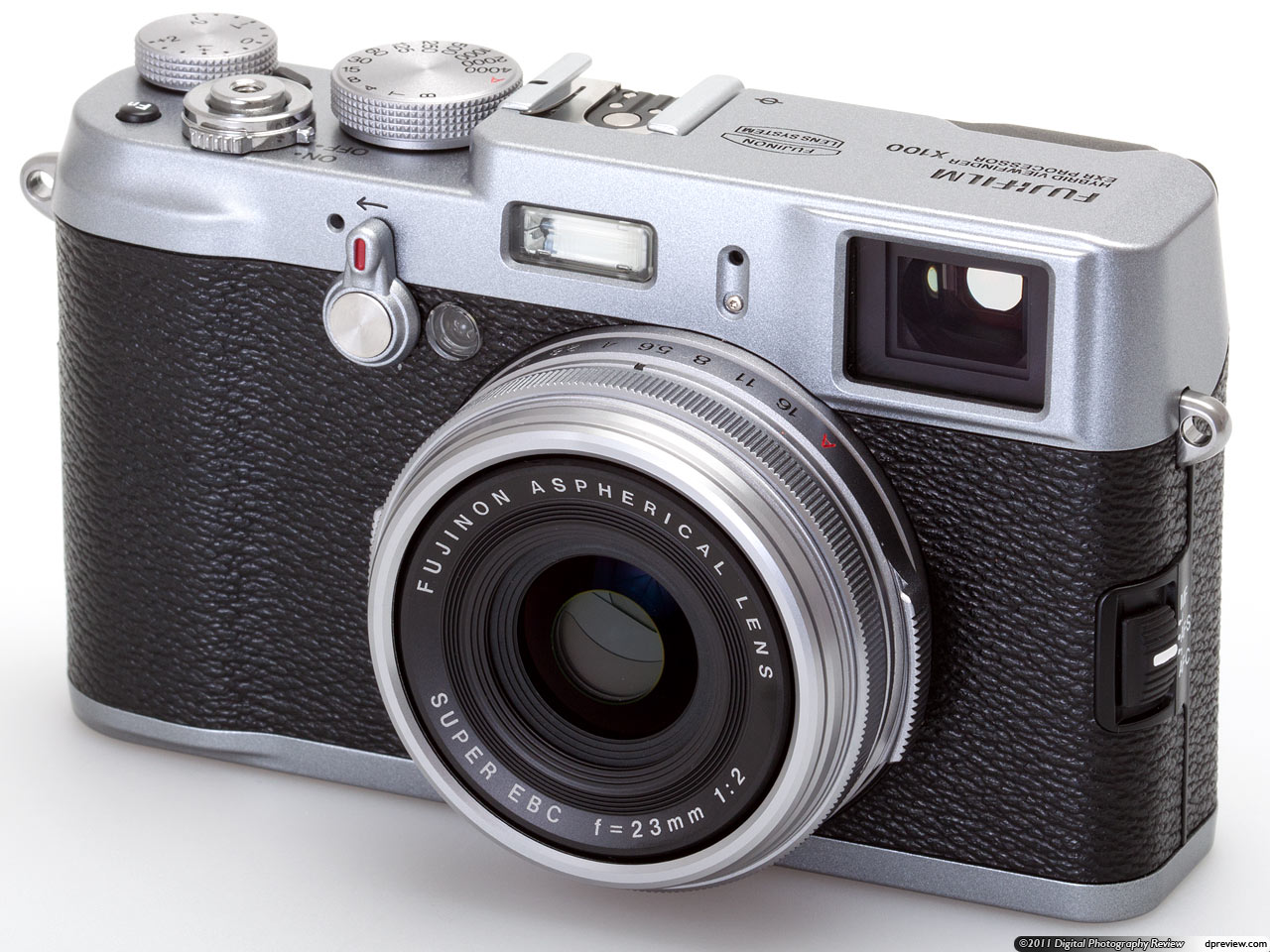 First we have Fuji X100 series (X100, X100S, X100T) which offers a very large APS-C sensor with a fixed 22mm lens(35mm in full frame). This camera will give you the same image quality as any Fuji X series camera, but with a single fixed lens instead of an interchangeable mounting system. I like this camera, but be prepared with the fixed lens. The 23mm(35mm in full frame) focal length is regarded as a semi-landscape focal length that is more suited for things like street photography. Be prepared to get to know the focal length really well, and for me it's the biggest limitation of this camera in general.
We also have Panasonic LX100, which has an MFT sensor inside that can produce a 12MP image that is comparable in image quality to any MFT camera of its generation. It sports a rather-nice 24-75mm f1.7-2.8 lens that can take anything from landscape to short-range portrait. It also packs a really nice 4K video capability, which is really cool. The main drawback of this camera is the size, it isn't exactly small, but it's still as small as a mid-sized MFT camera, which is small enough to fit in a small bag.
 The most popular choice for this kind of camera, however, is the Sony's RX100 series. It's now in its fourth generation, but even the first generation of the RX100 is still good enough for what it is today. It's the only one that's pocketable and resembles the form factor of a point-and-shoot camera. It packs a rather small 1-inch sensor, but it's still much bigger than your smartphone's or point-and-shoot camera's sensor. A definitely good all rounder camera, the only drawback of this camera is the lack of proper manual control. But for what it is, the RX100 is a really nice option.
Fuji also has a small-sensor high-end compact such as the X20 and X30. They are both very good for a small-sensored camera(1/1.7 inch sensor, not much bigger compared to your smartphone's sensor), but as with all small-sensor camera, they will take a toll in low light. And they are rather expensive for the price point, so I don't really recommend them.
I'm not really familiar with what Nikon or other brand has to offer for this category. But as a general rule of thumb, aim for at least 1-inch sensor size.
Mirrorless(or High-End Compact) vs DSLR
This is a very hot topic and a lot of people debate this topic. Here's my personal take on this topic:If you need to take high-speed action photography, use DSLR, there's no alternative choice for this. Phase detect AF can still deliver much better continuous autofocus, so stick with it if that's what you need to get the job done. I personally don't shoot sport, but even if I do, I'll be shooting in single AF most likely. As far as I know, most pros use Phase detect continuous AF when it comes to high-speed action stuffs though, so keep that in mind. Choices for this includes Canon 7D Mark II and Nikon D7200.
If you need abundant choice of 3rd party accessories and lens, DSLR still has more options. Canon and Nikon has more alternatives than any other camera system in the market, and some of the choices such as lenses and such are pretty good too! Consider Sigma 18-35mm f1.8 if you are using APS-C Canon or Nikon body, we don't have such native 3rd party lens available in any other system. This could justify the need to have a DSLR system.
Also, if you need better support for professional after-sales and service, chances are DSLR system will have better options compared to any mirrorless system to date. As far as I know, Canon and Nikon both have professional after-sales system program which allow its users to enjoy professional service such as camera repair and such that goes above and beyond other after-sales program in any camera system.
On the other hand, if you need video, use mirrorless, even Canon's highest non-cinema DSLR(5D Mark III) can't compete with feature-packed mirrorless cameras such as Panasonic's G7 and GH4, or Sony's A7S and A7R Mark II. DSLRs can't also do autofocus during video, unlike mirrorless cameras. Some high-end compact such as Panasonic LX100 can also be a good option.
If you need to have a camera that you can carry all the time without being dragged by its weight and the size of the lenses, get any of the high-end compact cameras. Most of people who I know that have DSLRs prefer to leave their DSLRs at home and take pictures using their phones, while those with high-end compacts will tend to carry their cameras whenever possible. Meanwhile, I know some mirrorless cameras can be very huge when compared to high-end compacts, but their overall size and weight(including lens and everything) are still lighter and smaller than the overall size and weight of a DSLR system. So depending on what's your preference, a mirrorless camera can also be a choice for a lighter overall system, especially for cameras like Panasonic GM1, GM5 and Olympus PEN series.
Along the same line, if you need to shoot pictures inconspicuously, use mirrorless or high-end compact cameras. DSLRs are big and will make you look like a pro photographer. Mirrorless or high-end compact camera usually doesn't look as intimidating as a DSLR and thus can help you to stay low-profile a bit better, without compromising image quality.
If you shoot at weird angles(high, low, shoot-from-the-hip, video), use mirrorless. Most DLSRs don't have adjustable vari-angle screen and even if they have, you'll have to rely on the OVF, anyway to be able to use the Phase detect AF, but most mirrorless cameras most of the time will have vari-angle screen that can be tilted or even swiveled to help you shoot at non-eye-level angles, while being able to keep using the full functionality of the Contrast detect AF. Some high-end compact cameras have this feature too, but not all.
However, if you want to "look like a pro and need show off my pro-looking camera", then by all means go for a DSLR. I know this is a somewhat important point to some people and that's why DSLRs and DSLR-like bridge cameras are still attractive to the average consumer market. Most mirrorless cameras don't look huge and tough, and some of them don't even look like a pro camera at all. Don't even mention high-end compact camera, they're too cute for the job. I've been treated differently when holding a DSLR and this could sometimes help me to get a better spot when shooting an event or things like that. Also if you have a picky client who requires you to use a pro-looking camera, having a DSLR can be very helpful.
Conclusion
It seemed that I prefer mirrorless cameras more than DSLR. Yes, I am biased toward mirrorless cameras, but not without a good reason. I had my Canon 650D back then, and I know very well what it's capable of, but now after my switch to MFT cameras, my eyes were really opened by the overall better experience that I had using my MFT cameras. I'm not saying that DSLRs don't have a place in the market anymore. They still have, but now some of them are slowly being replaced with mirrorless cameras that pack more features for the same price-point.Please treat this post as a merely personal opinion, and nothing more than that. I don't want to urge you to switch to mirrorless if you are still using DSLR. It's not the tool that matters in the end, it's the result. If you are comfortable using DSLR, then use it by all means and create great photos with it for as long as you have it. If you like mirrorless camera, shoot with it by all means. There's no bad camera these days, you can hardly pick a camera that performs very sub-par compared to the others(except EOS M, lolll), and that fact should make you feel comfortable getting any kind of camera for your photography needs.
I personally still and will continue to use MFT cameras for as long as they still suit my requirements. If you ask what camera will I choose if I could only have a single camera right now, that will be a Panasonic GX8.
That's all, I hope you enjoyed the post, cheers and God bless you :)


